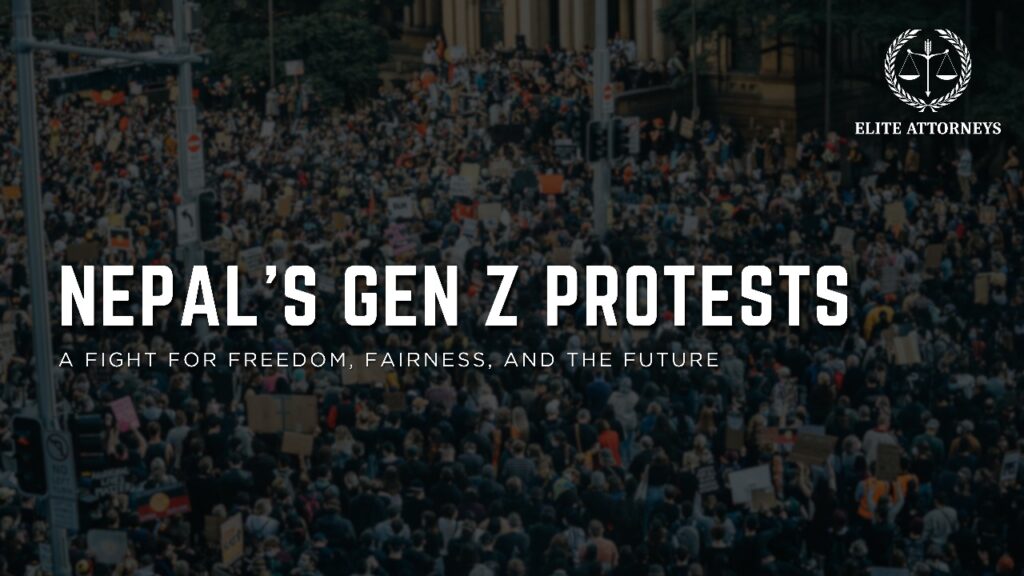
Nepal is at a turning point. What started as frustration over a social media ban has now grown into a nationwide movement led by young people demanding change. The protests are not only about apps like Facebook, YouTube, or Instagram being blocked — they represent something much deeper: a cry for accountability, transparency, and dignity.
What Sparked the Unrest?
- The government recently banned 26 social media platforms, saying it was for regulation.
- Young people, especially Gen Z, saw this as an attack on their freedom of speech. For them, social media is not just entertainment — it’s how they learn, work, and raise their voices.
- Protests quickly spread across Kathmandu and other cities. Sadly, clashes with the police turned violent, leaving several dead and many injured.
- The growing pressure forced Prime Minister KP Sharma Oli to resign. Protesters are now pushing for a more accountable and transparent interim government.
The Legal Angle
Nepal’s Constitution guarantees freedom of speech and peaceful assembly. Critics argue that:
- A blanket ban on social media platforms violates these rights.
- The use of excessive force by police raises questions about proportionality and accountability.
- Curfews and restrictions on movement may not meet the test of being lawful and necessary.
These legal debates aren’t just about technicalities — they are about whether citizens’ voices can truly be heard.
Why This Movement Matters
- Youth at the Frontline – Nepal’s Gen Z has grown up online. They know their rights and are unafraid to demand them.
- Corruption & Nepotism – For many protesters, the issue is bigger than social media. It’s about years of frustration over corruption and unfair governance.
- Digital Rights = Human Rights – In today’s world, blocking digital spaces is equal to silencing free speech.
- Setting a Precedent – How Nepal handles this crisis will shape the country’s democracy for years to come.
The Way Forward
- Accountability: Independent investigations into police violence are essential.
- Dialogue, Not Suppression: The government must listen to its young citizens instead of silencing them.
- Fair Digital Laws: Instead of sudden bans, Nepal needs transparent rules that balance regulation with freedom.
- Public Awareness: Citizens must know their rights so they can resist misuse of power.
Final Thoughts
- The ongoing protests in Nepal are more than just a fight against a social media ban. They are a demand for respect, justice, and a better future.
- Gen Z has made one thing very clear: they will not stay silent while their freedoms are stripped away. Their voices are echoing through Kathmandu’s streets — and the world is watching closely.
- This moment is Nepal’s chance to show that democracy is not about fear and control, but about freedom, accountability, and hope.